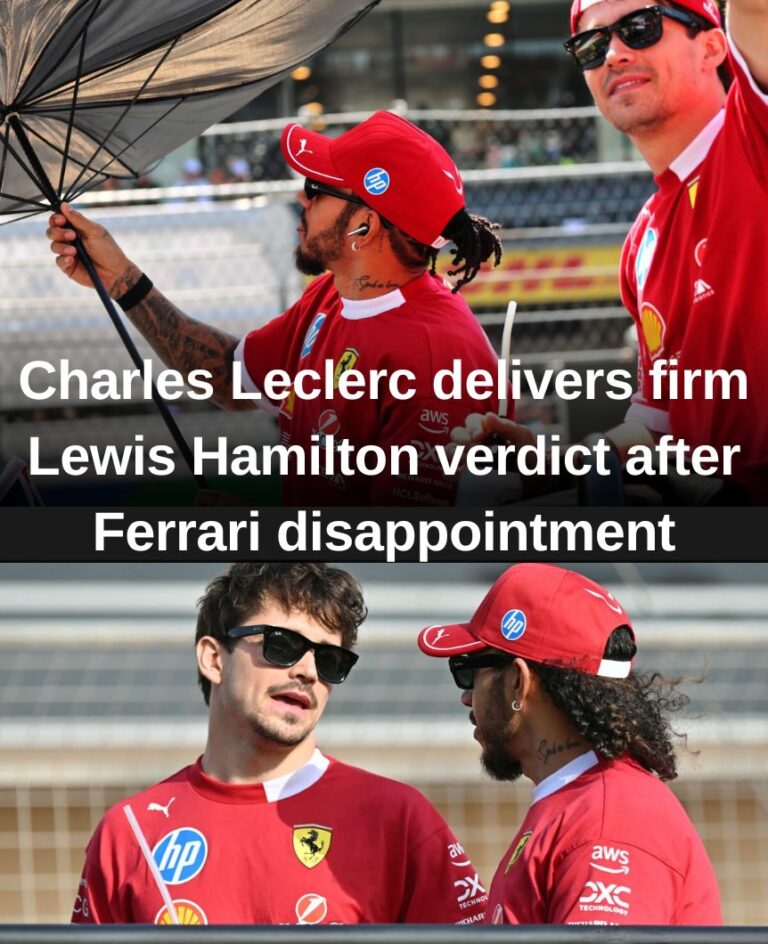
Lewis Hamilton’s future at Ferrari is under scrutiny after a challenging 2025 season.

Assessing Hamilton’s struggles in 2025
Several factors contribute to Lewis Hamilton’s difficult season, most notably the inherent limitations of the Ferrari SF-25. The team has had to adjust the car’s ride height beyond the optimal range to protect the underbody from wear issues, creating a machine that is challenging to extract maximum performance from. Despite these technical obstacles, Charles Leclerc has managed to secure seven podium finishes, while Lewis Hamilton has yet to reach the top three this year. While Charles Leclerc’s longer tenure at Ferrari since 2019 provides him with an advantage in adapting to the car, the gap between the two drivers—15 points to Lewis Hamilton’s 3 in races where both have finished—is significant and cannot be ignored.
Even Lewis Hamilton’s predecessor, Carlos Sainz, has acknowledged that adjusting to a new car takes time. While this may hold true for many drivers, the sport’s elite are typically able to acclimate quickly. Lewis Hamilton himself demonstrated this during his early years at Mercedes, where he immediately showed the pace to challenge Nico Rosberg and claim Grand Prix victories. In contrast, his performances in 2025 have appeared less comfortable than other high-profile drivers making similar transitions, suggesting that adaptation issues may not fully explain the struggles.
Evidence points to decline despite experience
Although the Briton remains a highly skilled driver, there is a growing perception that his performance may be declining. Critics argue that his difficulties with the ground-effect SF-25 are not unique to him, as no other established star driver has faced comparable issues. The data from 2025 further strengthens this argument, indicating that the team may benefit more from a younger, academy-trained driver who can grow with the car rather than struggle against it.
Hamilton acknowledges the possibility of change
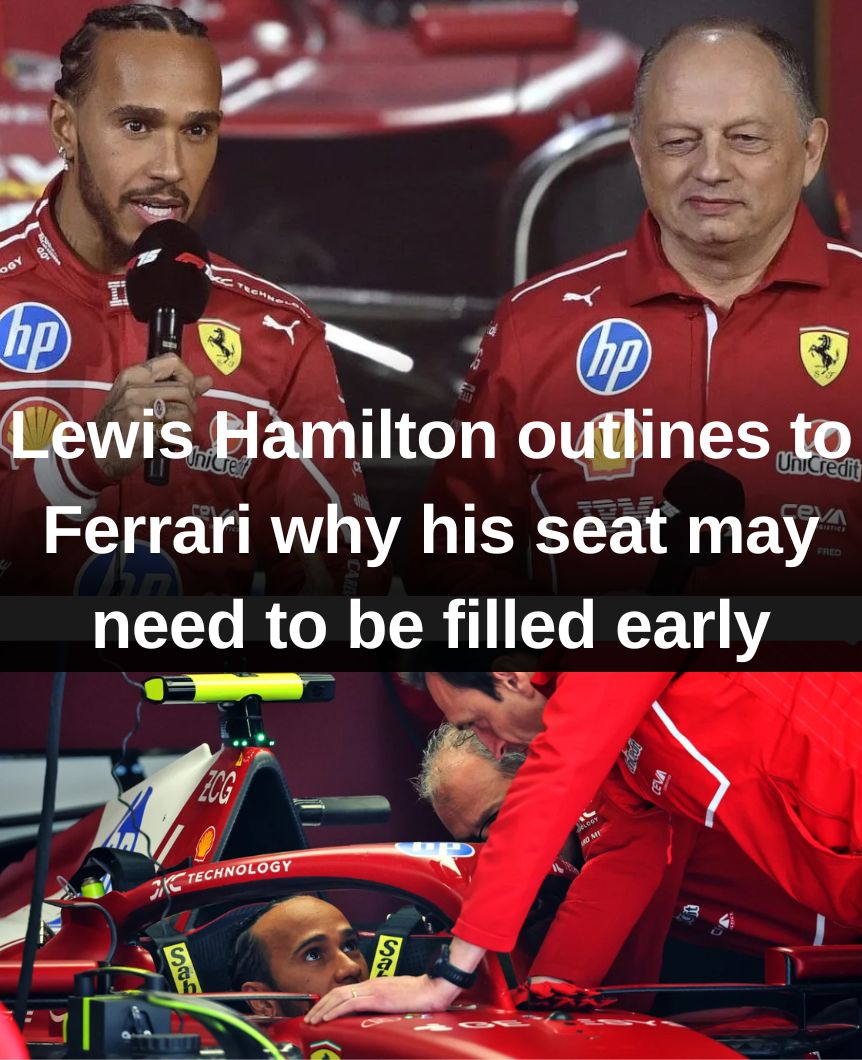
The situation reached a critical point at the Hungarian Grand Prix, where Lewis Hamilton openly acknowledged his own shortcomings after a Q2 exit while Leclerc secured pole position. He reportedly admitted that his performance was below expectations and suggested that Ferrari might need to consider a driver change. While team principal Fred Vasseur attributed Hamilton’s remarks to frustration, the underlying reality is that Ferrari faces increasing pressure to achieve results, and Lewis Hamilton’s continued struggles complicate their plans.
Replacing Lewis Hamilton with a young talent like Oliver Bearman may not instantly yield better results on track, but the narrative surrounding the team would shift significantly. A rising academy driver delivers fresh energy and long-term development potential, which could benefit Ferrari’s championship ambitions more effectively than relying on a veteran struggling to adapt to new technical challenges.
The implications for Ferrari’s strategy
Hamilton’s continued presence is adding pressure to Ferrari’s operations without offering proportional gains. If this situation persists into the 2026 season, the leadership, including Elkann, may have little choice but to prioritize long-term performance and team development over loyalty to a high-profile driver. With strategic decisions looming, Ferrari’s next moves will be closely watched by the F1 community, as the team navigates the balance between honoring contracts and pursuing competitive success in an increasingly demanding Formula 1 environment.